Planet Cents
UX Research/Design
%20(1).png)

Planet Cents Inc.
Timeline
July - October 2025
Role
Product Designer
Design Tools
Figma
A Sustainability Platform in Need of Modernization
Planet Cents’ website faced usability issues and an outdated interface that limited user engagement and clarity. Navigation was not fully intuitive, important information about sustainability metrics was difficult to locate, and visual inconsistencies weakened the platform’s credibility. The overall layout did not clearly communicate the company’s value proposition, making it harder for users to understand how environmental data such as CO₂ emissions and water usage could inform their purchasing decisions. These friction points reduced efficiency and impacted the overall user experience.
Reimagining the Sustainability Experience
The goal was to modernize the website and improve its usability, structure, and visual consistency. By refining navigation, reorganizing content hierarchy, and enhancing the presentation of sustainability data, the redesign aimed to create a cleaner and more accessible experience. Ultimately, the objective was to strengthen user trust, improve engagement, and make complex environmental insights easier to understand and act upon.

-1.png)
.png)
UX Research and User Surveys


For Planet Cents, we conducted usability surveys and gathered direct user feedback to understand how visitors interacted with the existing website and where friction occurred. Through structured beta testing, participants evaluated navigation clarity, visual consistency, accessibility, and overall ease of use. Many users reported difficulty locating key sustainability information and noted inconsistencies in layout and hierarchy that made the site feel outdated. In addition to survey data, we reviewed site analytics and performed a heuristic evaluation to assess information architecture and content organization. These findings highlighted the need for clearer navigation, improved content structure, and stronger visual cohesion. The research ultimately guided a redesign focused on simplifying the user journey, strengthening credibility, and making environmental data more accessible and intuitive to explore.
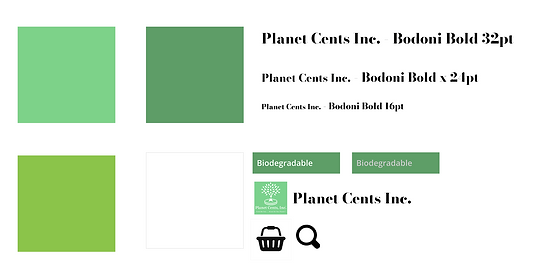
Visual Theme & Layout
.png)
Planet Cents uses a clean, eco-inspired visual theme built on soft greens and neutral tones to reflect sustainability and trust. Clear typography and consistent spacing improve readability, while the simple layout makes sustainability insights easy to explore. Overall, the design promotes transparency, accessibility, and a modern user experience.
The landing page opens with a clear and mission-driven headline introducing Planet Cents as a platform dedicated to sustainable shopping insights. Supporting text highlights key features such as CO₂ emissions tracking, water usage data, and biodegradable product indicators, with calls-to-action guiding users to explore products or learn more about environmental impact.
Once navigating the site, users can easily browse sustainability metrics presented in a structured and digestible format. Improved content hierarchy and streamlined navigation make it easier to locate key information, compare products, and understand environmental data at a glance. By combining clean visuals with organized data presentation, the redesigned platform transforms complex sustainability metrics into accessible, actionable insights that support informed and responsible consumer decisions.
Final Design
From the homepage to key product and sustainability pages, Planet Cents was refined to create a clearer and more intuitive browsing experience. Each iteration focused on improving navigation, strengthening visual consistency, and making environmental data easier to understand. Rather than overwhelming users with dense information, the design emphasizes structure, hierarchy, and readability. Over time, the platform evolved into a cohesive and modern system that highlights sustainability metrics in a digestible way. By simplifying layouts and improving content organization, the final design transforms the website into a more trustworthy, user-friendly space where consumers can confidently explore and act on environmental insights.


Conclusion & Takeaway
Building YouTube Education pushed me to think holistically about product development, not just interface design. Through user research and problem definition, we uncovered how students rely on YouTube for learning but struggle with distraction and lack of structure. Competitive analysis and market positioning helped us refine where the product could realistically fit, while prioritization and feasibility work forced us to make intentional trade-offs. By the end of the project, we had translated research into a clear product vision supported by thoughtful design, defined success metrics, and a strategic roadmap. Overall, the experience strengthened my ability to connect user insights, business thinking, and execution into a cohesive and scalable product idea.
